
What Ontario Beaches Can You Reach On Guided Day Trips From Toronto With Cliff And Turquoise Water Views?
People don’t ask this question casually.
They ask it after seeing photos that look almost unreal. After hearing someone casually mention water so blue it feels misplaced. After realizing that a regular city beach isn’t going to scratch the itch this time.
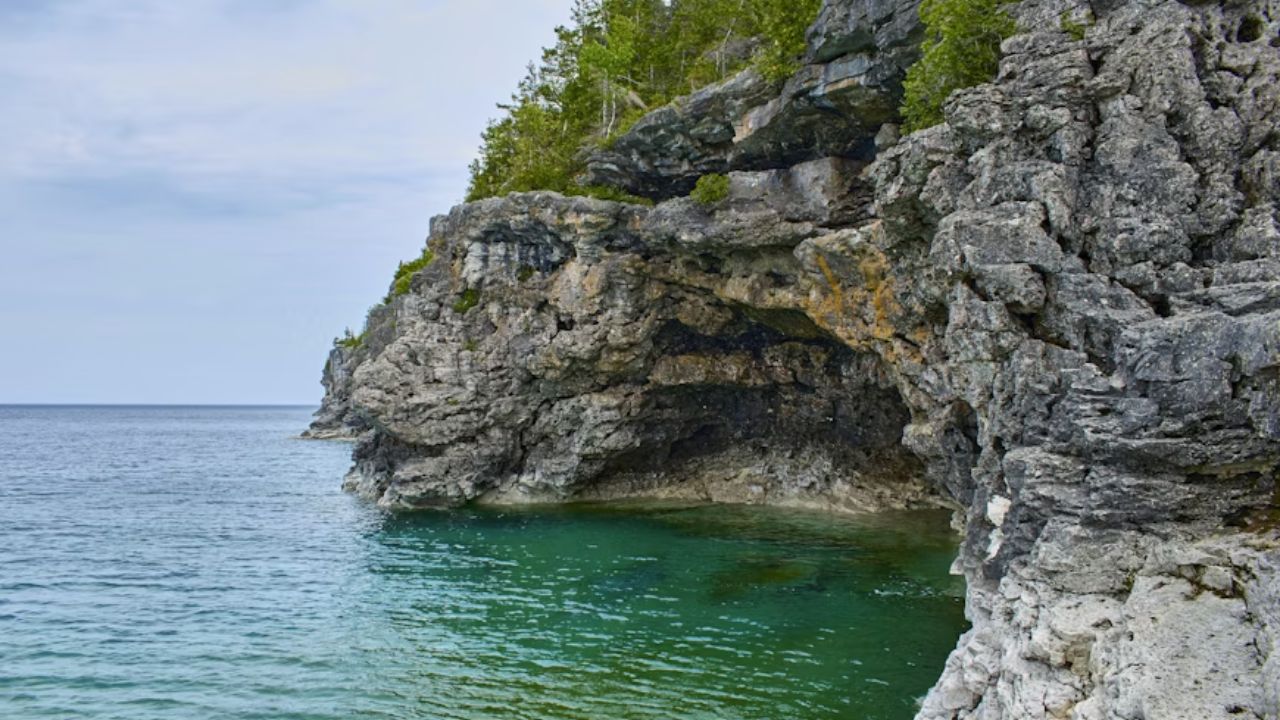
They want cliffs. Real cliffs. They want that shock of turquoise water below pale stone. And they want to know if those kinds of Ontario beaches are actually reachable from Toronto in a single day without turning the experience into a logistical headache.
The short answer is yes. But only if you understand where these landscapes exist, how access works, and why guided day trips matter more here than almost anywhere else in the province.
Where Cliff Backed Turquoise Beaches Exist in Ontario
Ontario’s dramatic cliffside beaches are not evenly spread across the province. They exist in very specific geological zones shaped by limestone formations and ancient seabeds.
These areas are defined by elevated escarpments that drop directly into deep, clear water. The cliffs aren’t decorative. They are the reason the water looks the way it does. Limestone reflects light differently. Depth increases quickly. Sediment settles instead of staying suspended.
That combination creates the turquoise effect people chase.
Most Ontario beaches closer to major cities sit on flatter terrain. The water is shallower. Sand and silt stay active. The color changes. The mood changes, too.
Cliff-backed beaches are different because the land forces a different relationship with the water. You see it first from above. You approach it gradually. You earn it.
The Bruce Peninsula is Where It’s At
The Bruce Peninsula is this long, skinny piece of land that sticks up into Lake Huron and Georgian Bay. It’s about 300km from Toronto, so around three and a half hours if traffic cooperates.
The geology here is wild. You’ve got this ancient limestone from like 400 million years ago that’s been getting carved up by waves and weather forever. The Niagara Escarpment runs through here, which is basically a giant cliff that creates all these dramatic drop-offs into the water.
And the water. It’s this Caribbean-looking turquoise that feels completely wrong for Canada. Your brain sees it and goes “wait, what?” Because we’re supposed to have dark, cold lakes. Not this glowing blue-green situation that looks like it belongs in the Bahamas.
The Grotto Might Actually Break Your Brain
The Grotto is probably the most famous spot, and yeah, it lives up to the hype. It’s this circular cave pool carved right into the white limestone cliffs, and the water inside is this completely absurd shade of blue. Like someone dumped a million blue raspberry popsicles in there.
You can see straight down to the bottom even though it’s deep. There’s a cave opening that frames the lake beyond it. The cliffs around it are white and gray and ancient-looking. The whole thing feels like a movie set, except it’s real and it’s been there for thousands of years.
Getting there involves some hiking and scrambling over rocks. Parks Canada controls access now with timed entry because it was getting absolutely mobbed. Guided tours usually have this sorted already, which saves you from trying to snag a reservation at midnight six weeks in advance or whatever the system requires.
Discover the magic on our Bruce Peninsula Day Trip.
Swimming in it is possible depending on water levels and conditions. The water’s cold, though. Like really cold. But some people do it anyway, because how often do you get to swim in something that looks like that?
Singing Sands is the Chill Option
If the Grotto is the dramatic Instagram star, Singing Sands is the laid-back friend who’s secretly just as cool. It’s an actual beach with actual sand (the Bruce is mostly rocky shoreline). And yes, the sand really does make this weird squeaking singing noise when you walk on it. Something about the shape of the quartz grains.
The water here is shallow and warm-ish (relatively speaking… it’s still Georgian Bay). The sand is soft. The beach curves in this nice arc backed by dunes and trees. It feels more accessible than the cliff-jumping drama of other spots.
But that turquoise water? Still there. Still ridiculously clear. You can wade out and watch tiny fish darting around your feet. The color shifts throughout the day as the light changes. Morning, it’s this pale aqua, by afternoon it’s deeper blue-green, sunset turns it almost purple in spots.
A lot of Ontario beaches don’t have this combination of actual soft sand plus that crystal-clear, colorful water. Usually, you get one or the other. This spot has both, which makes it popular with families, but honestly, anyone who wants to actually swim rather than just take photos from clifftops.
Experience both on our curated Bruce Peninsula adventures.
Tobermory: The Town at the End of the Road
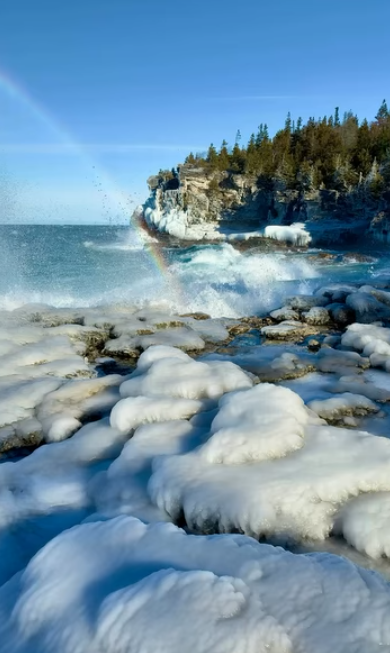
Tobermory sits at the very tip of the Bruce Peninsula, where Lake Huron and Georgian Bay meet (locals will argue about the exact meeting point, but whatever). It’s tiny, maybe 400 people live there year-round, but in summer it explodes with tourists.
The harbor is postcard-perfect in that classic Ontario cottage-town way. Fishing boats, little restaurants serving whitefish and chips, rocky shores where you can poke around looking at whatever the waves brought in. It’s charming without trying too hard.
But the real action is the surrounding coastline.
Little Cove and Dunks Bay Are Stupidly Clear
These two spots are right next to each other, and both have water so clear it’s actually hard to process. Little Cove is more protected, tucked into this inlet where the water barely moves. You stand on the shore and look down, and it’s like there’s no water there at all. Just air. Except you can see fish swimming around 15 feet down, so obviously there’s water.
Dunks Bay opens up more to bigger views. The cliffs aren’t as tall as the Grotto, but they’re still impressive, these layered limestone shelves that create natural steps down to the water. The turquoise color is somehow even more vibrant here, probably because of how the sun hits it, combined with the white rock.
These spots are less crowded than the big-name locations, which is part of why guided tours like them. You get the same incredible scenery without fighting through crowds. And the guides know the safe ways down to water level if you want to get closer or dip your feet in.
The Wild Side: Cabot Head
The eastern shore facing Georgian Bay feels different. More exposed, more rugged. The weather hits it harder. It’s beautiful in this windswept, dramatic way.
Cabot Head has this old lighthouse perched on the cliffs, and trails that wind along the shoreline with views that go on forever. Just blue water meeting the sky with nothing in between. The beaches here are pebbly more than sandy, but that water is still that same impossible turquoise pooling between rocks.
What I like about this area is that it feels less discovered. The Grotto has permits and managed access, and everyone knows about it. Cabot Head still has that feeling like you found something most people miss. The trails are quieter. The viewpoints are less photographed. It’s more about just being there than getting the perfect shot.
Why These Beaches Are Not Easy to Reach Independently
This is where most surface-level articles fail.
Cliffside beaches with turquoise water are rarely roadside stops. Access often involves protected lands, conservation zones, limited entry points, and strict regulations that change throughout the year.
Parking is usually capped. Some access points require timed entry. Others involve long trail approaches that aren’t clearly marked for first-time visitors. Weather conditions can affect safety dramatically, especially near cliffs.
For someone driving up from Toronto without local knowledge, it’s easy to arrive late, miss access windows, or end up on the wrong trail entirely.
That’s exactly why guided day trips exist for these Ontario beaches. Not as a convenience. As a necessity.
Join a hassle-free small-group day trip from Toronto to the Bruce Peninsula.
How Guided Day Trips Solve the Real Problems
A guided day trip does three critical things that most people underestimate.
First, it handles access timing. Cliffside beaches are highly sensitive to crowd flow. Guided trips plan arrivals to avoid peak congestion and reduce environmental stress.
Second, it manages route selection. Trails leading to cliff-backed beaches are chosen based on current conditions, group ability, and safety. Not guesswork. Not outdated maps.
Third, it removes decision fatigue. No one is watching the clock, checking trail signs, or worrying about getting back to the car before dark. The mental space that opens up is part of the experience.
That’s why people searching for Ontario beaches with these features increasingly choose guided options rather than attempting the trip independently.
What Makes the Water Look So Unreal
This deserves a real explanation.
Turquoise water in Ontario is not shallow tropical blue. It comes from light interacting with suspended limestone particles, underwater rock shelves, and rapid depth changes near cliffs.
When sunlight hits clear, cold water over pale stone, shorter wavelengths scatter. The result is that milky blue green tone that photographers struggle to capture accurately.
This effect is strongest in areas where cliffs drop directly into the water rather than tapering slowly. That’s why cliff-backed Ontario beaches consistently produce the most striking visuals.
Temperature plays a role, too. Cold water holds clarity longer. Fewer algae blooms. Less sediment movement. The look stays crisp even on bright days.
What a Typical Guided Day Looks Like in Reality
This isn’t a casual beach outing. And that’s the point.
Most guided trips begin early enough to maximize daylight and minimize traffic. The drive itself becomes part of the transition. Urban density gives way to forest. The forest opens into exposed rock and shoreline.
Time is spent along elevated paths before reaching water. That sequence matters. Seeing the shoreline from above first creates anticipation and context. It changes how people experience the beach once they reach it.
Once at the water, time is intentionally unhurried. Not rushed. Not overstayed. The schedule allows for observation, rest, and quiet moments without pressure.
The return is planned just as carefully. Enough time to decompress. Enough structure to ensure a smooth end to the day.
This rhythm is why guided access to Ontario beaches feels more complete than independent attempts.
Who These Trips Are Actually For
There’s a misconception that guided trips are only for beginners. That’s rarely true in this context.
They attract people who value efficiency. People who understand that some environments require local knowledge. People who want depth rather than improvisation.
Experienced hikers appreciate not having to manage logistics. Newer explorers appreciate the safety net. Everyone benefits from access that respects the landscape.
And because these beaches are within a single day’s reach, they appeal to people who want something meaningful without committing to overnight travel.
Seasonal Considerations That Matter
Another detail often ignored.
Cliffside, Ontario beaches change significantly throughout the year. Water temperature, wind exposure, trail conditions, and daylight hours all influence the experience.
Guided trips adapt to these changes. Routes shift. Timelines adjust. Safety protocols evolve with conditions. That flexibility is difficult to replicate independently unless someone knows the area extremely well.
This adaptability ensures that each visit aligns with what the environment can realistically offer at that time.
Why Sustainability Is Not Optional Here
These beaches remain beautiful because access is controlled.
Cliff erosion is real. Vegetation damage happens quickly. Informal paths create long-term harm. Guided trips follow designated routes and educate participants without lecturing.
That matters for the longevity of these Ontario beaches. Enjoyment today should not compromise access tomorrow.
Responsible access is not a bonus feature. It’s part of what makes guided trips the right choice.
The Experience Beyond the Visuals
The cliffs and water get attention first. But the deeper impact is emotional.
Being above clear water changes posture. People slow down. Voices soften. Distractions fade. The nervous system responds before the mind catches up.
That response is why these environments feel restorative rather than merely scenic.
And that’s why people keep searching for cliff-backed Ontario beaches they can reach from Toronto without turning the day into a stress test.
Frequently Asked Questions
Are these Ontario beaches accessible on a single-day trip from Toronto?
Yes. Guided tours are specifically designed to make these Ontario beaches reachable within one day. Early departures, planned access windows, and organized transportation allow visitors to experience the Bruce Peninsula and Georgian Bay shoreline areas without overnight stays.
Why are guided tours recommended for cliffside beaches in Ontario?
Cliffside beaches are often located in protected areas with restricted parking, limited entry points, and seasonal regulations. Guided tours manage access permissions, timing, and trail navigation, making visits safer and more efficient while protecting the fragile limestone coastline.
Is the turquoise water visible year-round?
The turquoise color is most visible from late spring through early fall when sunlight angles and water clarity are optimal. Cold temperatures keep sediment low, but wind and cloud cover can affect water color on any given day. Guides adjust routes and timing to maximize viewing conditions.
Final Perspective
Ontario offers beaches that rival faraway destinations in appearance and impact. But the ones with cliffs and turquoise water exist in specific, protected landscapes that demand thoughtful access.
Guided day trips from Toronto make those places reachable in a way that is safe, efficient, and deeply satisfying. They remove friction while preserving authenticity.
For people who want more than a flat shoreline and crowded sand, these experiences answer the question fully.
Yes, those Ontario beaches exist.
Yes, they can be reached in a day.
And yes, the right way to experience them is with guidance that understands both the land and the people walking through it.
Ready to See These Beaches for Yourself?
If those cliffside views and turquoise waters sound tempting, this is where Toronto Eco Adventures makes it easy. Their guided day trips handle the long drive, park access, and timing, so all that’s left to do is enjoy the views. No confusing routes. No parking stress. Just a well-planned day led by people who know these Ontario beaches inside out and respect the land they explore. It’s a simple way to turn curiosity into a real experience without overthinking a single detail.