
7 Amazing Mushrooms to Forage in Ontario: Beginner’s Guide
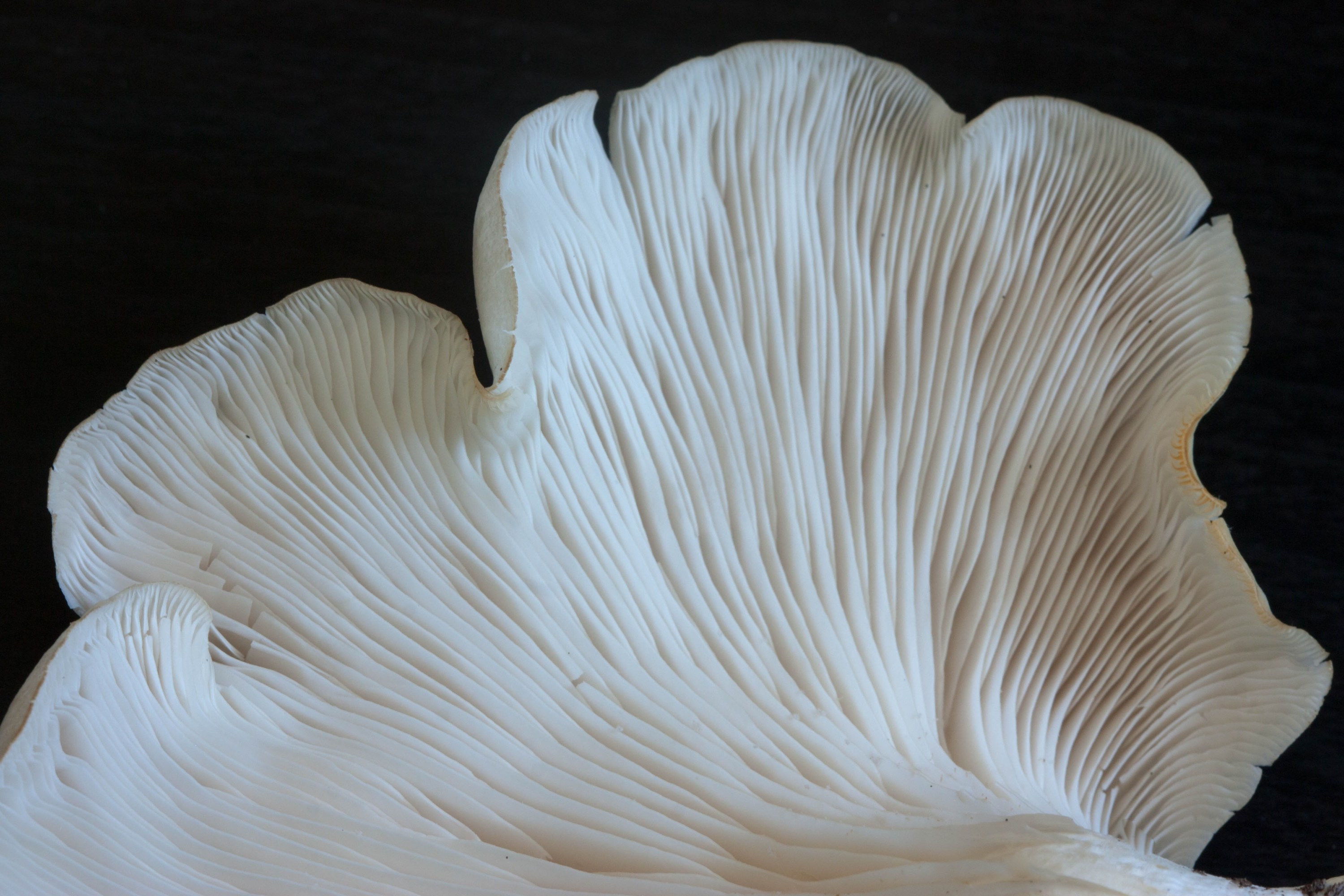
If you are new to mushroom foraging in Ontario, start with well-known species and learn from an expert first. Ontario has a huge range of wild fungi, but safe foraging takes more than spotting a familiar shape. Some toxic mushrooms look very much like edible ones. Even experienced foragers can face hard calls.
That does not mean you should stay out of the woods. Mushroom hunting can turn a normal forest walk into a small treasure hunt. You slow down, check trees, scan the leaf litter, and start seeing things you once walked past.
The seven mushrooms below are good species to learn about. They include spring morels, summer chanterelles, and several fall finds. But treat every description as a learning aid, not a field ID.
1. Morel Mushrooms
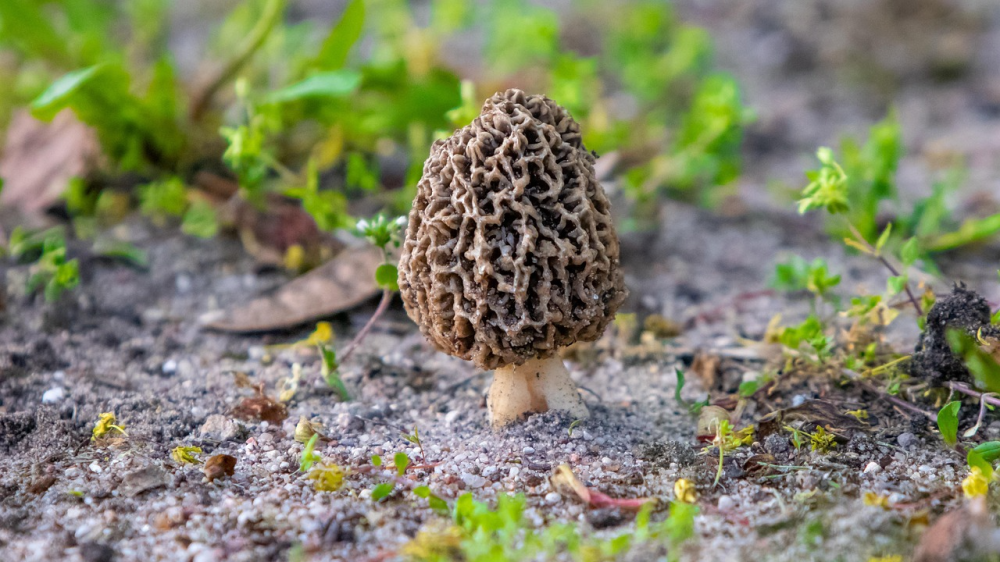
Morels are one of Ontario’s most famous spring mushrooms. They usually appear from late spring into early summer, with some Ontario sources placing their main season around May and early June. They often grow on the ground in woods, orchards, and other suitable areas.
Their honeycomb-like caps make them easy to recognize once you know what to study. Yet this is where new foragers must slow down. False morels can look similar and can be dangerous. A true morel has a pitted cap, while false morels have a more wrinkled form.
Morels also need proper cooking. Ontario’s Poison Centre reported more than twice the usual number of calls linked to true morels in 2026. It stressed that even generally safe wild mushrooms should be fully cooked.
2. Golden Chanterelles
Golden chanterelles bring a bright splash of colour to summer woods. Ontario sources list them as a mid-summer to fall species. They grow on the ground in woodland settings, rather than directly from dead logs.
Their yellow to golden colour is part of their appeal, so is their shape. But colour alone is not enough. Some orange or yellow mushrooms can cause illness and may resemble chanterelles.
A key lesson in mushroom hunting is to study several traits at once. Look at the cap, underside, stem, habitat, smell, and growth pattern. Chanterelles are also a good example of why a field guide matters. Ontario’s public health review lists false chanterelles and Jack-o’-lantern mushrooms among possible lookalikes or poisonous species.
3. Chicken of the Woods
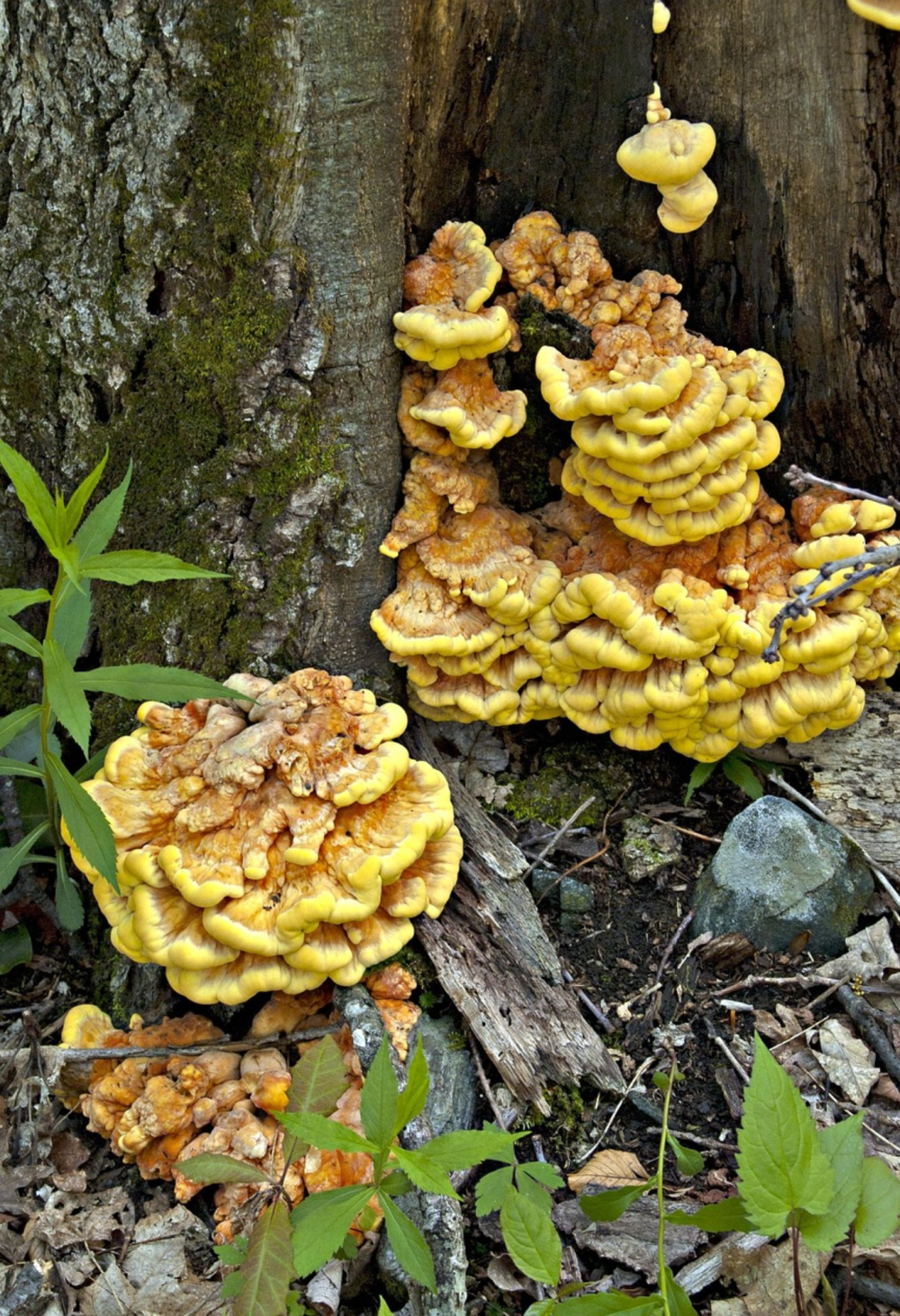
Chicken of the woods is hard to miss when a fresh cluster appears on a tree. Its bright orange and yellow shelf-like growth can look almost like a splash of paint on a trunk. Ontario Parks lists chicken of the woods among edible mushrooms found in the province.
It usually grows on wood, including living or dead hardwood trees. Young growth tends to be softer and more appealing for cooking. Older growth can become tough, so age matters when assessing a specimen.
This is a great species to study with a guide. Once you see a healthy specimen in person, its structure makes much more sense than it does in a phone photo.
4. Hen of the Woods
Hen of the woods, also called maitake, is a fall favourite among mushroom hunters. It forms large, ruffled clusters near the base of trees, especially oak. Ontario references describe it as a choice edible species.
The name makes sense when you see one. The clustered fronds can look like feathers packed together. Instead of one smooth cap, you get many overlapping sections growing from a shared base.
Fall is a good time to learn about this mushroom. Forest floors become busy with colour, leaves, and fallen branches. That makes careful searching more important. Kneel down, check the base of trees, and look slowly.
5. Giant Puffball
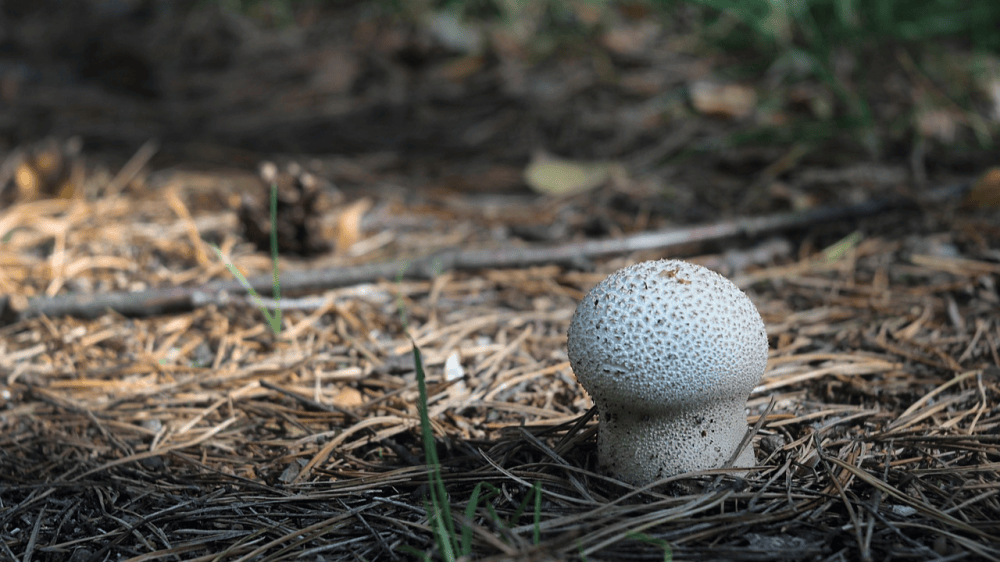
Giant puffballs look almost comical when they appear in a field. A mature one can become much larger than the mushrooms most people know from shops. Ontario’s public health review lists giant puffball as an edible wild mushroom found from late summer into fall.
A young giant puffball should have firm, pure white flesh inside. A mushroom with a developing internal structure is not something a beginner should treat as a puffball. Some young poisonous mushrooms can resemble rounded puffballs.
6. Lobster Mushroom
Lobster mushrooms are one of the strangest finds on an Ontario forest walk. They are not simply a normal mushroom with a red-orange cap. Instead, another fungus changes the appearance of certain host mushrooms.
The result can look bright orange or reddish, with a firm outer surface. Ontario foraging references include lobster mushrooms among the province’s commonly sought edible fungi.
This is a good example of why mushroom hunting is more than a colour game. You need to understand what you are looking at and what it is growing from. For a beginner, that makes lobster mushrooms more interesting than easy.
7. Oyster Mushrooms
Wild oyster mushrooms are another Ontario species worth learning. They grow in clusters on wood and are commonly associated with hardwoods. They can appear during cool, damp periods, making them a useful species to watch for beyond the main summer season.
Their fan-like caps often overlap like roof shingles. You may find several growing together on a fallen tree or other woody surface. That growth pattern is useful when learning the species.
Look at the underside, stem, attachment point, habitat, and other traits. A mushroom that merely looks like an oyster should not go straight into your cooking basket.
Should Beginners Try Mushroom Foraging Alone?
This is the question most new foragers should ask first. Do I really need a guide? For wild mushrooms, the answer is worth taking seriously.
The Ontario Poison Centre says only mushrooms identified by someone with expertise should be eaten. It also warns that cooking does not remove the toxins from most poisonous mushrooms.
That makes an expert-led outing a smart way to build your skills. You can learn how experienced foragers inspect a mushroom. You also learn what questions to ask before picking it.
How to Plan Your First Mushroom Foraging Trip
The best first trip is not about filling a basket. It is about learning to spot patterns and make careful choices. Before heading into the woods, think about the whole day. Where are you allowed to forage? What is the weather doing? Do you know the area? Can someone with real mushroom knowledge check your finds?
Keep your first trip simple:
- Wear closed shoes with good grip.
- Carry water, snacks, and a small first-aid kit.
- Bring a proper regional field guide.
- Carry a basket or breathable container for learning specimens.
- Take clear photos from several angles.
- Record the tree, ground, and habitat around each find.
- Never rely on an app as your only identification method.
- Leave anything uncertain where you found it.
There is another rule that is easy to forget. Do not assume every public forest allows foraging. Ontario Parks states that collecting plants and fungi is prohibited in provincial parks. This includes mushrooms that are edible. The reason goes beyond visitor rules. Mushrooms play key roles in forest ecosystems, and heavy collecting can affect those systems.
So check the rules for the exact land before you pick. Crown land, private land, conservation areas, municipal lands, and parks can have different rules.
What Is the Best Season for Mushroom Foraging in Ontario?
There is no single mushroom season across Ontario. Different species appear at different times.
Morels can start the year in spring while chanterelles arrive later. Chicken of the woods can appear through the warmer months, while fall brings species such as hen of the woods and giant puffballs. Ontario’s public health review also lists different fruiting periods for several edible species.
Rain can also change what you see. Mushrooms often become much more noticeable after wet weather. Still, a rainy week does not mean every mushroom you find is ready to eat. If your schedule is flexible, plan around the species you want to learn. That makes the trip feel less like a random forest walk and more like a focused nature lesson.
Add a Guided Ontario Hiking Adventure
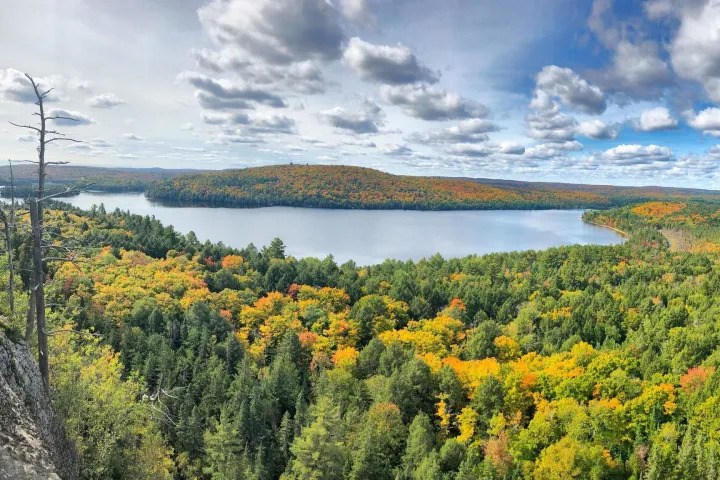
If you are already travelling from Toronto for a nature day, you can make the outing bigger. Toronto Eco Adventures’ Algonquin Park Summer Hiking Adventure offers another way to experience Ontario’s forests.
The 13-hour trip includes transport from Toronto, park admission and parking, and guided hiking. The current itinerary includes a 5-kilometre hike around Rock Lake, with time to relax by the water. Depending on the weather, the hike may also be swapped for canoeing, with an additional rental fee.
This is not a mushroom-foraging tour, and it should not be treated as one. Instead, it pairs well with the wider goal of learning about Ontario’s forests. You can spend one day studying fungi with an expert, then return to the woods with a sharper eye.
What Should You Do If You Eat an Unknown Mushroom?
Do not wait for symptoms before asking for help. Some mushroom poisonings can take hours to show signs. The Ontario Poison Centre says people should contact it if they are concerned about mushroom poisoning.
Keep any remaining mushroom or food if it can be done safely. Photos can also help health professionals understand what may have been eaten. Do not try to treat the problem yourself or assume cooking has made a poisonous mushroom harmless.
Final Thoughts
The best mushroom hunt may be the one where you come home with fewer mushrooms but much better knowledge. After all, once you learn to truly see the forest floor, what else might you notice that you used to walk past?
FAQs
Q1: What are the best mushrooms for beginners in Ontario?
Morels, chanterelles, chicken of the woods, hen of the woods, giant puffballs, lobster mushrooms, and oyster mushrooms are useful species to study. None should be eaten based on a beginner’s visual ID alone.
Q2: When is mushroom season in Ontario?
It varies by species and region. Morels are mainly spring finds, while chanterelles and chicken of the woods appear later. Many fall species become easier to find from late summer into autumn.
Q3: Can you forage mushrooms in Ontario provincial parks?
No. Ontario Parks says foraging for plants and fungi is prohibited in provincial parks. Always check the rules for the specific land before collecting anything.
Q4: Can you eat wild mushrooms raw?
Do not assume a wild mushroom is safe raw. The Ontario Poison Centre advises fully cooking mushrooms that are generally considered safe to eat. Some poisonous mushrooms remain toxic after cooking.
Q5: What is the safest way to start mushroom foraging in Ontario?
Start with a local expert, learn a few species well, and practise observing before harvesting. A good first goal is not dinner. It is being able to explain what you found, where it grew, and why an expert considers its identification sound.