
Hamilton Waterfalls: Complete Guide to the Waterfall Capital with 100+ Cascades
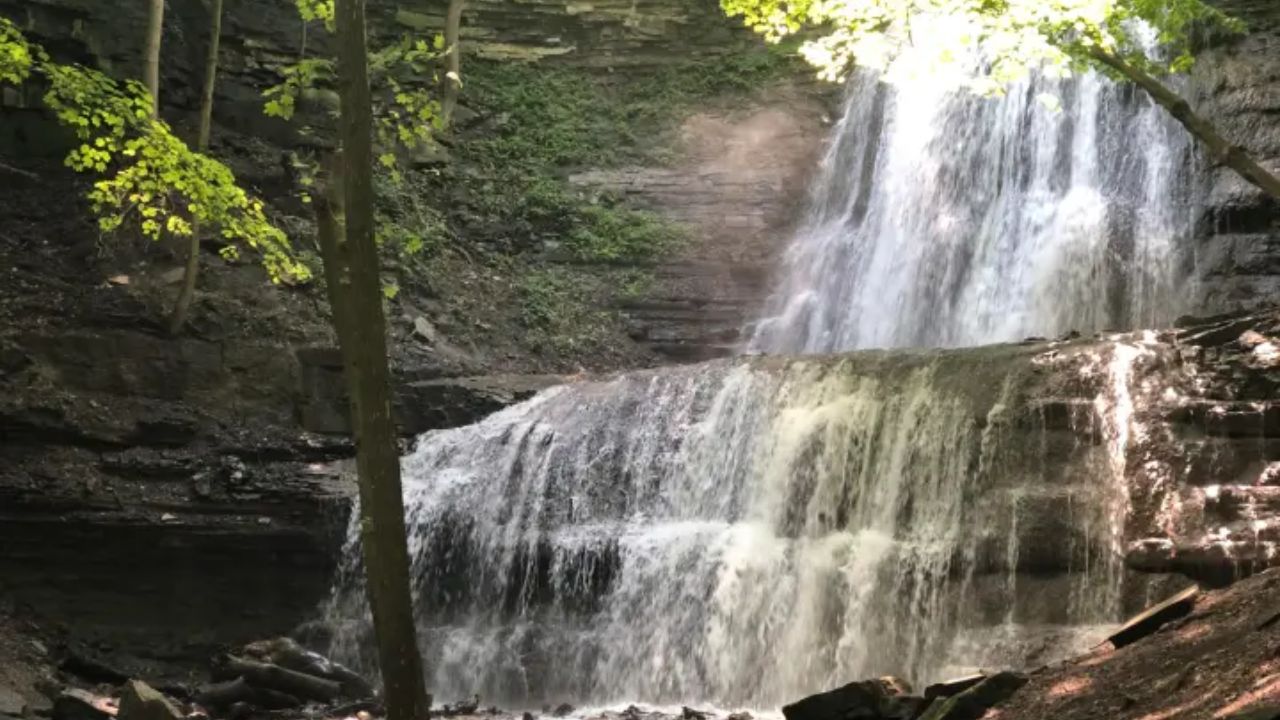
Imagine cold water cascading down steep rock walls, crashing into the gorge below as cool mist rises into the air. How beautiful and calming it would be! What if we say you could experience this in front of you instead of just imagining it?
There’s only one place in the world where you can see this scene. The place is known for having more than 100 waterfalls. And which place is that? It is Hamilton in Ontario, Canada.
Many think that it’s just Niagara Falls that’s good to visit, but Hamilton has much more than you can imagine. Most of them are easily accessible and make up for scenic cascades in Hamilton. With over 100 waterfalls packed into one region, it has one of the highest waterfall concentrations in Canada.
While visiting every waterfall can be tough, especially if you are visiting Hamilton for 2 or 3 days, there are a few names that are a must-visit. We’ve curated a list of the unmissable waterfalls you should visit if you’re planning a trip to Ontario and would like to see the waterfalls.
Why Hamilton Has So Many Waterfalls
Now, let’s understand why Hamilton is called the “Waterfall Capital of the World.”
The city of Hamilton sits along the Niagara Escarpment, a long ridge that stretches across Ontario. It is part of a UNESCO World Biosphere Reserve where water flows from the higher escarpment down into the lower city. Over time, that drop created dozens of cascades, ribbons, and plunging waterfalls.
When the ice melts in spring and the steady rainfall pours, they both combine and feel the waterfalls. That is why timing matters so much. If you go after heavy rain in April or May, the falls roar. If you go in late August during a dry spell, some look thin. They don’t look bad, just quieter.
What Makes Hamilton Waterfalls Special
There are waterfalls all over North America. So why does this region feel different?
- First, the density is rare. You can see multiple waterfalls within a short drive.
- Second, many are easy to reach. You do not need a full-day hike unless you want one.
- Third, the settings change fast. Forest trails. Stone stairs. Urban backdrops. Cliff edges.
It feels like a mini adventure hub. And yes, photos look amazing here. The layered rock and mist create that dramatic look people love.
Our Top 10 Picks of the Must-Visit Waterfalls
1. Webster’s Falls
Webster’s Falls feels like the headline act. It drops in a wide 72-foot curtain and looks powerful even from a distance. In spring, the water crashes hard and throws mist into the air, and you can hear it before you see it.
The viewing platform is closed and safe. Families love this spot because access is simple. The surrounding Spencer Gorge area also has forest trails and stone pathways. In the fall, the leaves around the gorge turn bright red and orange. It looks like a painting.
On weekends during the peak season, the place could feel a bit crowded. Therefore, we’d suggest you go early. If possible, you can also go on weekdays for a calmer vibe.
2. Tew’s Falls
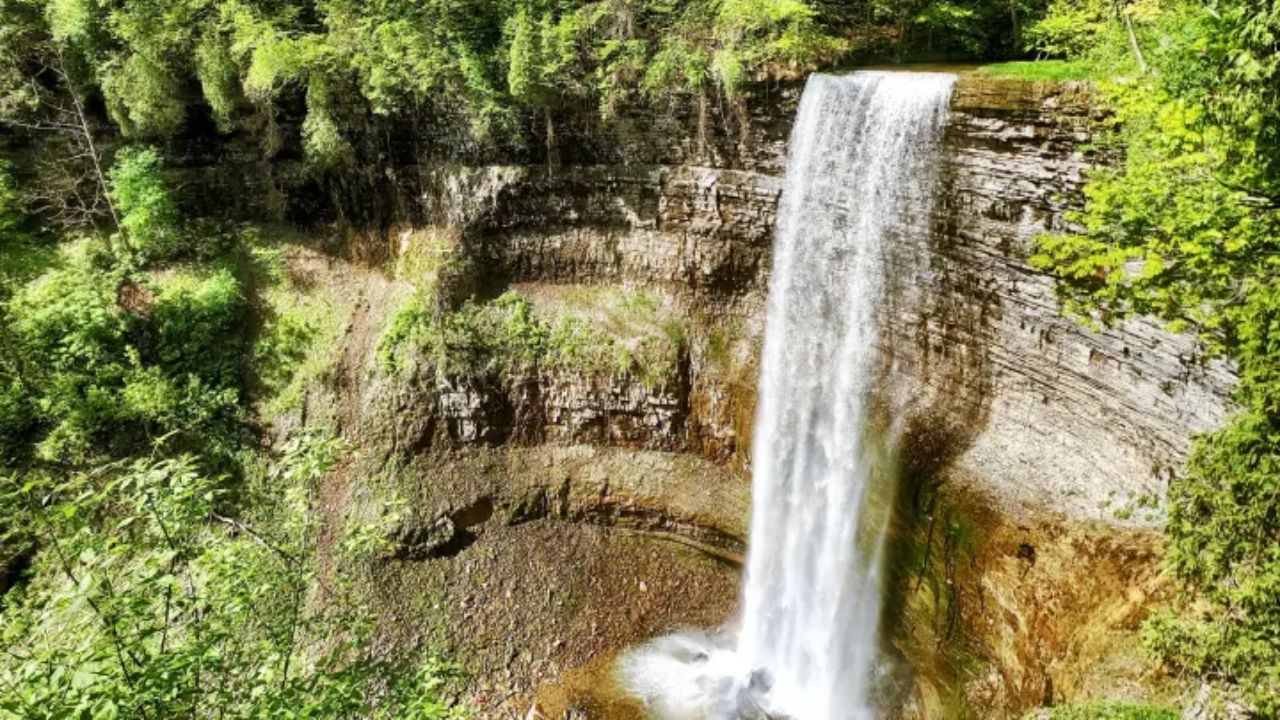
Tew’s Falls is tall and elegant. At about 135 feet, it is one of the tallest waterfalls in the region. The water falls in a thin ribbon, especially in summer.
What makes it special is the setting. It sits near Dundas Peak, where you get sweeping views over the valley. The cliff edge looks dramatic, and the wind feels strong up there.
After heavy rain, the waterfall looks fuller and louder. On the other hand, in dry months, it becomes a graceful stream. It still looks beautiful, just a different kind.
If you fear heights, stay well back from the edge. The lookout is safe, but awareness matters.
3. Albion Falls
Albion Falls looks like a staircase made of stone and water. With a height of 62 feet, instead of one drop, it spreads over layered rock shelves.
It feels wide and textured, and photographers love it because the rock patterns add depth. After rainfall, the steps fill with rushing water. In dry weather, it becomes calmer but still striking.
Albion Falls is also sometimes called” Lover’s Leap,” as there’s a rumor of a 19th -century ghost wandering there.
If you’re planning to visit this waterfall, there’s something you should remember. Access to the base is restricted. The upper viewing platform gives you the best angle. But try staying behind barriers, as the rocks can be slippery.
4. Devil’s Punchbowl Falls
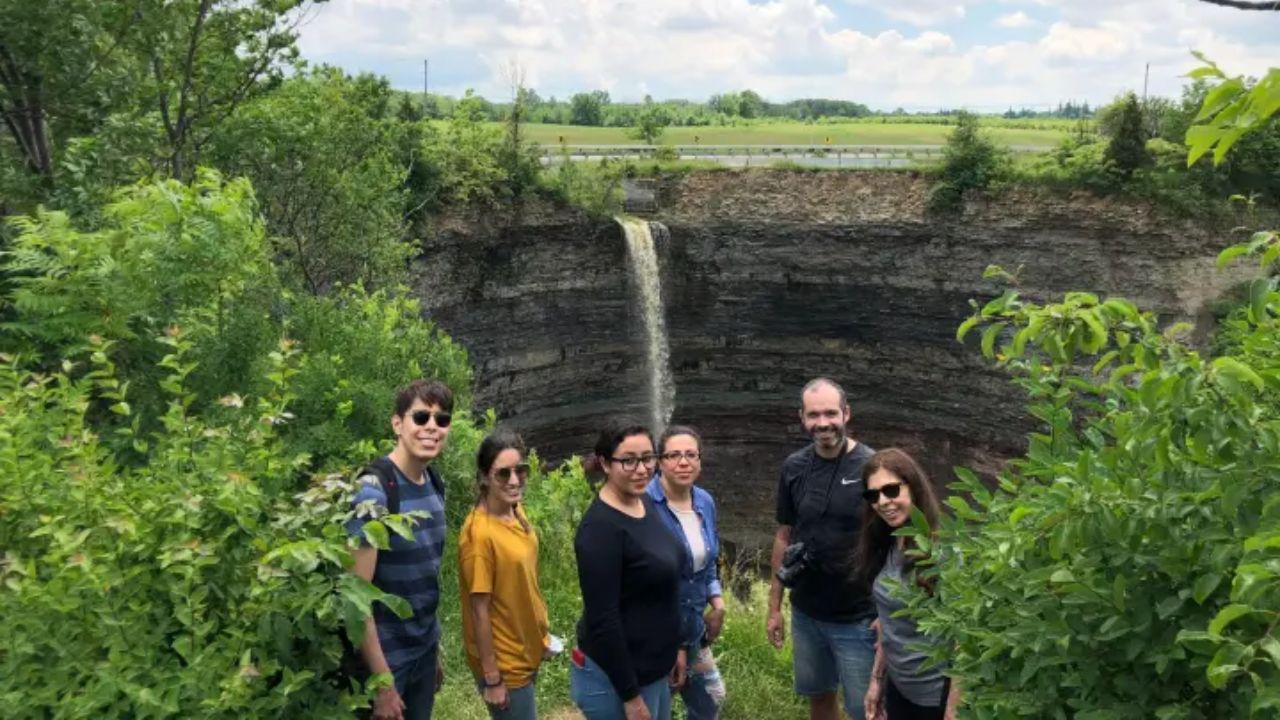
Devil’s Punchbowl looks dramatic from above. From a height of 430 feet, a thin waterfall drops into a deep bowl-shaped gorge carved into the escarpment.
The layered rock walls glow warm orange at sunset. The upper lookout is easy to reach and offers panoramic views over the city and Lake Ontario in the distance.
The lower trail can be steep and muddy. If you want a relaxed visit, stick to the top as it feels extravagant.
5. Sherman Falls
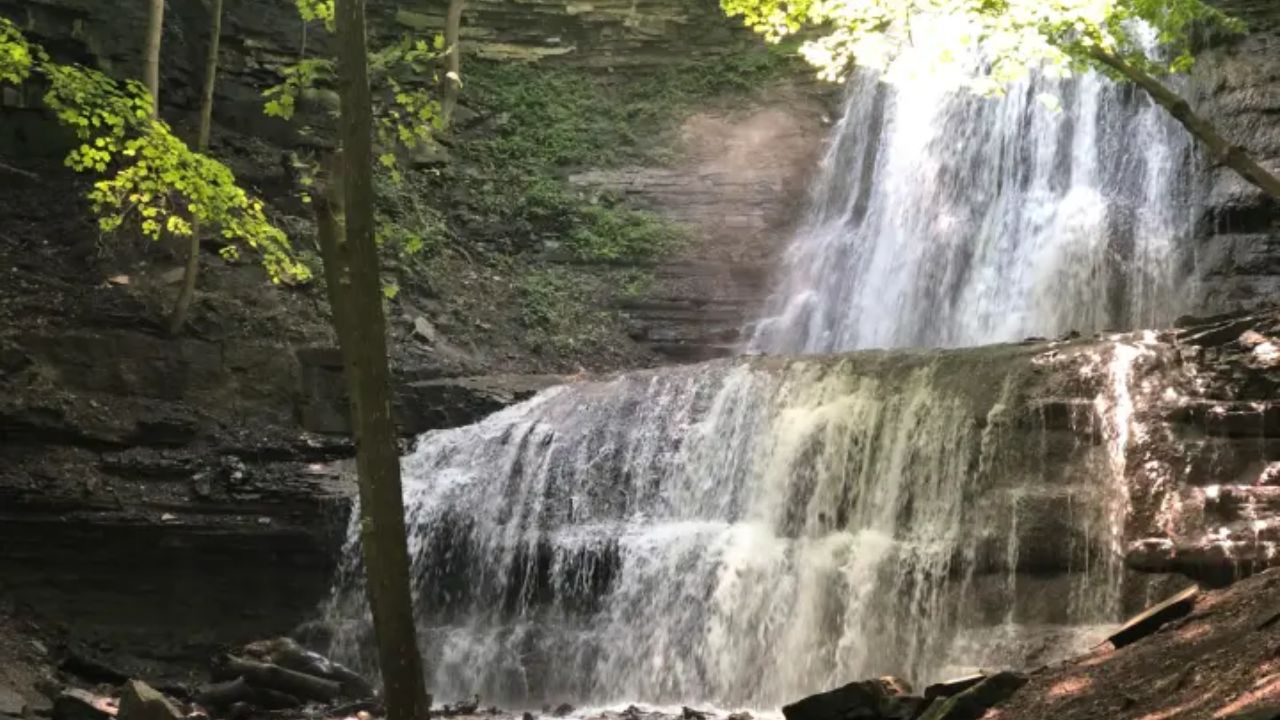
Sherman Falls is a more intimate waterfall compared to the others on the list. It drops around 56 feet in a wide, curtain shape and you can even walk closer to the base of the waterfall if conditions permit.
It is less urban than some other spots, as the forest setting makes it peaceful. Parking is limited and roadside, which keeps crowds slightly lower. But still, go early on weekends. If you want a waterfall that feels close and personal, this is a great pick.
6. Canterbury Falls
Canterbury Falls sits near Sherman Falls, but it feels wilder. The water flows down from 35 feet above the rocky steps instead of dropping cleanly.
The terrain is uneven; therefore, you need good shoes. Moss grows on the rocks, and it gets slick after rain.
It feels less crowded, which makes the atmosphere quiet, making it even more special. If you enjoy raw, natural settings, this one stands out.
7. Smokey Hollow Falls
Smokey Hollow has a well-built boardwalk and staircase system. It feels structured and accessible.
The waterfall is modest in height of 33 feet, but the setting is charming. After rainfall, the water picks up speed and fills the creek below.
This is a good stop if you want an easy walk without rough forest terrain.
8. Tiffany Falls
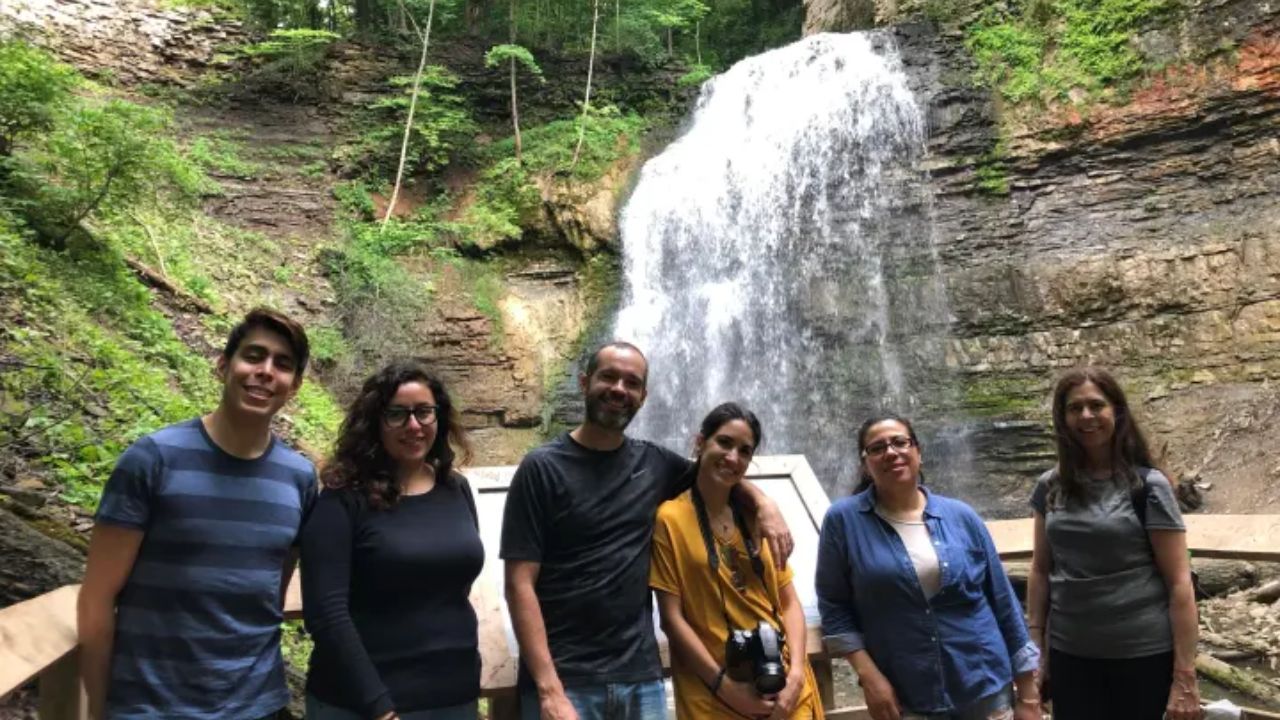
Tiffany Falls is one of the easiest waterfall hikes in the region. The trail is short and mostly flat.
The waterfall drops about 70 feet into a narrow gorge. In winter, it freezes into thick ice columns. It looks magical. However, in spring, the water runs strongly.
By summer, the flow softens into a thinner stream, moving gently over the rock face, yet it still holds a calm, graceful beauty that feels peaceful and refined.
This is one of the safest and simplest waterfalls to reach and is perfect if you’re traveling with kids.
9. Felker’s Falls
Felker’s Falls drops about 72 feet in one strong plunge. It feels quieter than Webster’s Falls. The parking lot is nearby, so access is easy. After heavy rain, the water looks powerful and loud.
In winter, ice forms along the rock face and becomes a frozen sculpture. This one feels like a hidden gem, even though it is simple to reach.
10. Borer’s Falls
Borer’s Falls sits in a conservation area near Dundas. It is about 49 feet high and framed by forest. The trail is moderate but peaceful, and you feel far away from the city.
In the fall, the trees around it turn bright yellow and orange. It becomes a quiet escape. If you prefer fewer crowds and more nature, this waterfall is a strong choice.
When Is the Best Time to Visit Hamilton Waterfalls
Timing changes everything about how you see the waterfall.
Spring is the peak waterfall season. This is the time when snow melts, rain is frequent, and the flow of water is strong. The trails are muddy, but it’s worth it.
Summer is warm and green, with most of the waterfalls turning into a stream. But still it is pretty, just a bit calmer.
Fall brings color to the entire place. If you love autumn leaves, October is magic. Just expect the peak season crowd at this time.
Finally, winter transforms everything. Ice forms along the cliffs, looking like a frozen palace. But trails can be icy and risky.
If you ask us which month feels best overall, we would say May because the balance is right.
What to Pack for Hamilton Waterfalls
This is not a technical hike. But it is still nature and nature can be unpredictable at times. Here is what you should bring:
- Comfortable walking shoes with grip
- Water bottle
- Light rain jacket
- Camera or phone with space for photos
- Small backpack
- Waterproof shoes (in spring)
- Spikes for boots (in winter)
Beyond Waterfalls: Make It a Full Day
If you drive out, do not rush back. Grab some coffee and explore the small town of Dundas. Take some time out to walk local trails and make a visit to conservation areas.
You can also pair your waterfall visit with a guided outdoor tour through Toronto EcoAdventures. Their experiences often blend hiking, nature learning, and scenic exploration.
It turns a short visit into a deeper outdoor day.
Final Thoughts on Hamilton Waterfalls
Hamilton waterfalls offer variety, beauty, and easy access in one compact region. You do not need mountaineering skills. You do not need weeks of planning. You just need good timing and smart choices.
Every season you visit has a completely different look at the waterfall. Either way, you leave with mist on your face and photos in your phone.
And once you have seen one cascade, you may start wondering how many more are waiting around the next bend.